









الاستشعار عن بُعد للأنظمة البحرية مجموعة يوآف لهان البحثية في كلية تشارني لعلوم البحار، جامعة حيفا

نظرة شاملة من الأعلى على العمليات والأنماط في البيئة البحرية

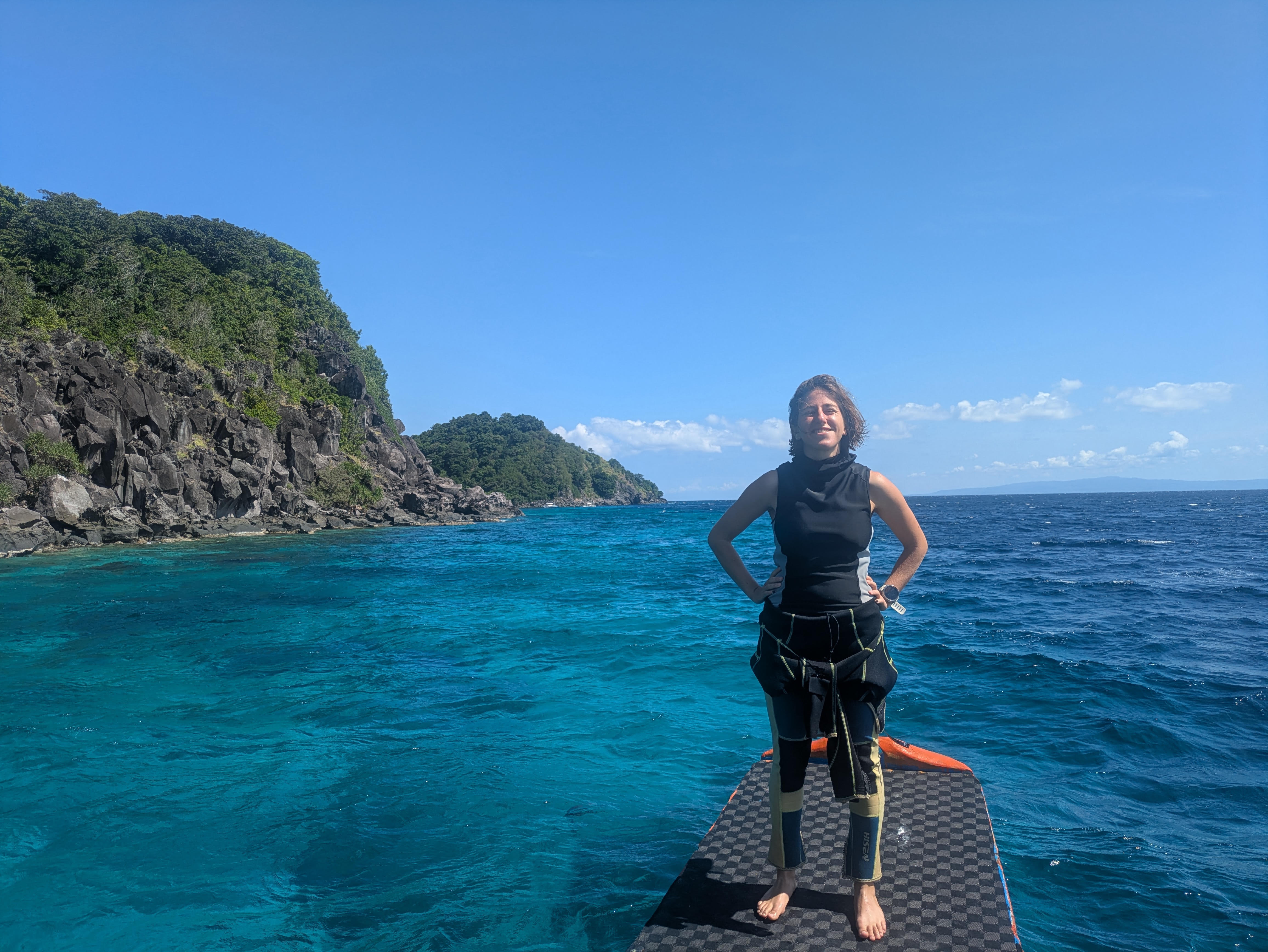
رحلة بحثية لمدة 48 ساعة

الأبحاث

ندمج البيانات الميدانية مع أرصاد الاستشعار عن بُعد من الأقمار الصناعية والطائرات والطائرات المسيّرة، لتوصيف أنماط التباين والحركة عبر مقاييس مكانية وزمنية متعددة، وتقديم رؤى قائمة على الرصد في مختلف جوانب البحث البحري.

ديناميكيات العوالق والجغرافيا الحيوية والأنماط المكانية

  • الأنماط العالمية لتبقّع العوالق
  • دراسة لاغرانجية لديناميكيات بقع العوالق النباتية
  • الضوابط الفيزيائية والبيولوجية على تنظيم العوالق
  • النمذجة العددية للتفاعلات بين العوالق

ديناميكيات أسراب قناديل البحر

  • توصيف أنماط السباحة
  • تأثير السباحة على الحركة
  • أنماط التوزيع المكاني والزماني

الدورة المائية والكيمياء الحيوية الجيولوجية وبيئة شرق البحر الأبيض المتوسط

  • الترابط بين المياه الساحلية ومياه البحر المفتوح
  • الأثر البيئي للخلط الأفقي دون المتوسط النطاق
  • قياس أنماط التباين عبر المكان (من الأمتار إلى مئات الكيلومترات) والزمان (من الأيام إلى العقود)

أبحاث المحيطات القائمة على البيانات

  • أتمتة عملية دمج بيانات المحيطات
  • تحديد الأنماط الناشئة في مجموعات بيانات المحيطات متعددة التخصصات

الطبقة الدقيقة لسطح البحر (SML): من الديناميكيات إلى أنماط التباين

  • تأثير دوران المحيطات على الخصائص الفيزيائية والكيميائية للطبقة الدقيقة
  • تطوير وتطبيق أساليب الاستشعار عن بُعد
  • قياس أنماط التباين المكاني والزماني

بيئة المسطحات المائية الداخلية في إسرائيل

  • بحث قائم على البيانات للنظام البيئي لبحيرة طبريا
  • حساسية النظام البيئي للتغيرات في الأحوال الجوية
  • الاستشعار عن بُعد بالأقمار الصناعية لجودة المياه في الخزانات

أبحاث مختارة

Emergent patterns of patchiness differ between physical and planktonic properties in the ocean

Gray, P. C., Boss, E., Bourdin, G., Tara Pacific Consortium, Mission Microbiomes AtlantECO, & Lehahn, Y. (2025)

Nature Communications, 63

While a rich history of patchiness research has explored spatial structure in theocean, there is no consensus over the controls on biological patchiness andhow physical-ecological-biogeochemical processes and patchiness relate.The prevailing thought is that physics structures biology, but this has not beentested at basin scale with consistent in situ measurements. Here we use theslope of the relationship between variance vs spatial scale to quantify patchi-ness and ~650,000 nearly continuous (dx ~ 200 m) measurements - repre-senting the Atlantic, Pacific, and Southern Oceans - and find that patchiness ofbiological parameters and physical parameters are uncorrelated. We showvariance slope is an emergent property with unique patterns in biogeochem-ical properties distinct from physical tracers, yet correlated with other biolo-gical tracers. These results provide context for decades of observations withdifferent interpretations, suggest the use of spatial tests of biogeochemicalmodel parameterizations, and open the way for studies into processes reg-ulating the observed patterns.

An overview of the ocean data ecosystem

Bloch Haimson, M., Lehahn, Y., & Sagi, T. (2025)

Ocean Science, 21

The oceans, covering approximately 70 % of Earth's surface, play a pivotal role in climate regulation, biodiversity, and biogeochemical processes. The large and growing volume and complexity of ocean data, spanning diverse disciplines and formats, and dispersed across a wide range of sources, presents opportunities and challenges for advancing scientific research, informing policy, and addressing societal needs. In this review paper we aim to create an easy-to-navigate map of the field of ocean data, enabling the reader to establish a broad understanding of the ocean data sector, and bridging gaps between different disciplines and levels of familiarity with ocean data. This is done through the concept of the “data ecosystem”, which is used to describe the actors, organizations, and infrastructures involved in all aspects of the data value chain. We propose a structured ocean data ecosystem model as a method for comprehensive mapping of the ocean data market landscape. The proposed model consists of five key elements: stakeholders, societal elements, interoperability tools (such as standards and best practices), data sources and product offering, and emerging solutions. We provide an up-to-date analysis of ocean data sources and emerging solutions and a summary of relevant data standardization efforts such as marine standards, vocabularies, and ontologies. All this will promote the development of needs-based solutions, components, products, services, and technologies, thus contributing to the evolution of the ocean data ecosystem and promoting data-based ocean research.
عرض المقال وصول مفتوح

Directional swimming patterns in jellyfish aggregations

Malul, D., Berman, H., Solodoch, A., Tal, O., Barak, N., Mizrahi, G., Berenshtein, I., Toledo, Y., Lotan, T., Sher, D., Shavit, U., & Lehahn, Y. (2024)

Current Biology, 34: 4033-4038.e5

Having a profound influence on marine and coastal environments worldwide, jellyfish hold significant scientific, economic, and public interest.1,2,3,4,5 The predictability of outbreaks and dispersion of jellyfish is limited by a fundamental gap in our understanding of their movement. Although there is evidence that jellyfish may actively affect their position,6,7,8,9,10 the role of active swimming in controlling jellyfish movement, and the characteristics of jellyfish swimming behavior, are not well understood. Consequently, jellyfish are often regarded as passively drifting or randomly moving organisms, both conceptually2,11 and in process studies.12,13,14 Here we show that the movement of jellyfish is modulated by distinctly directional swimming patterns that are oriented away from the coast and against the direction of surface gravity waves. Taking a Lagrangian viewpoint from drone videos that allows the tracking of multiple adjacent jellyfish, and focusing on the scyphozoan jellyfish Rhopilema nomadica as a model organism, we show that the behavior of individual jellyfish translates into a synchronized directional swimming of the aggregation as a whole. Numerical simulations show that this counter-wave swimming behavior results in biased correlated random-walk movement patterns that reduce the risk of stranding, thus providing jellyfish with an adaptive advantage critical to their survival. Our results emphasize the importance of active swimming in regulating jellyfish movement and open the way for a more accurate representation in model studies, thus improving the predictability of jellyfish outbreaks and their dispersion and contributing to our ability to mitigate their possible impact on coastal infrastructure and populations.
عرض المقال وصول مفتوح

تواصل معنا

معلومات الاتصال

العنوان

المبنى متعدد الأغراض, غرفة 280
جامعة حيفا
شارع أبا حوشي 199
جبل الكرمل، حيفا, 3498838
إسرائيل

البريد الإلكتروني

ylehahn@univ.haifa.ac.il

الهاتف

+972-5452-80992